Research
To start, I researched safety net program fundamentals across rental assistance, utility assistance and child care. I wanted to understand the federal requirements for these programs to make sure my design thinking was in line.
Once I had a grasp of the fundamentals, I reviewed Beam’s existing background research and worked with the product team to develop hypotheses on features that would solve problems for safety net administrators.
To understand the complexities specific to New Hampshire, I audited the existing rental assistance paper application, then traveled to the SNHS offices with Beam’s leadership team for an 8-hour discovery session. There, we walked through their existing processes with various specialists. Over the subsequent weeks, we had follow-up calls to test concepts with their case managers and validate our approach.
Strategy Development
From the discovery process, four design priorities came to the forefront:
• Create a foundation of components that lowers the cognitive load on vulnerable Americans applying for assistance
• Design concepts and features that are simple and feasible, and thoroughly vetted with engineers
• Make the product scalable across different partners and different types of aid with minimal modification
• Ensure all elements are accessible and work on as many devices as possible
On the applicant side, since many users are facing the threat of eviction, we established that the product needed to be simple, manageable and accessible. It was imperative that it work well on low bandwidth, and on whatever device users have access to.
On the administrative side, the goal was to help process applications quickly, equitably and without fraud, keeping as much trust in the safety net as possible. If working correctly, the new product would cut into the existing backlog of assistance applications.
The product needed to seamlessly balance a tenant application (including sections for rental and utility assistance), a landlord application, and an administrative dashboard to allow for the quick and accurate review of applications and funding impact metrics.
Design System
Beam had a new design system that was in its infancy when I arrived. I refined and expanded the base styles, then oversaw our junior designer incorporating them into larger components and writing guidance for engineers.
Each iteration of the design was done in full fidelity using the design system. If an element was needed that didn’t yet exist, we created one. This made it easy to spin up clickable prototypes for potential partners, and kept the design system from growing unnecessarily bulky.
UX and UI Design
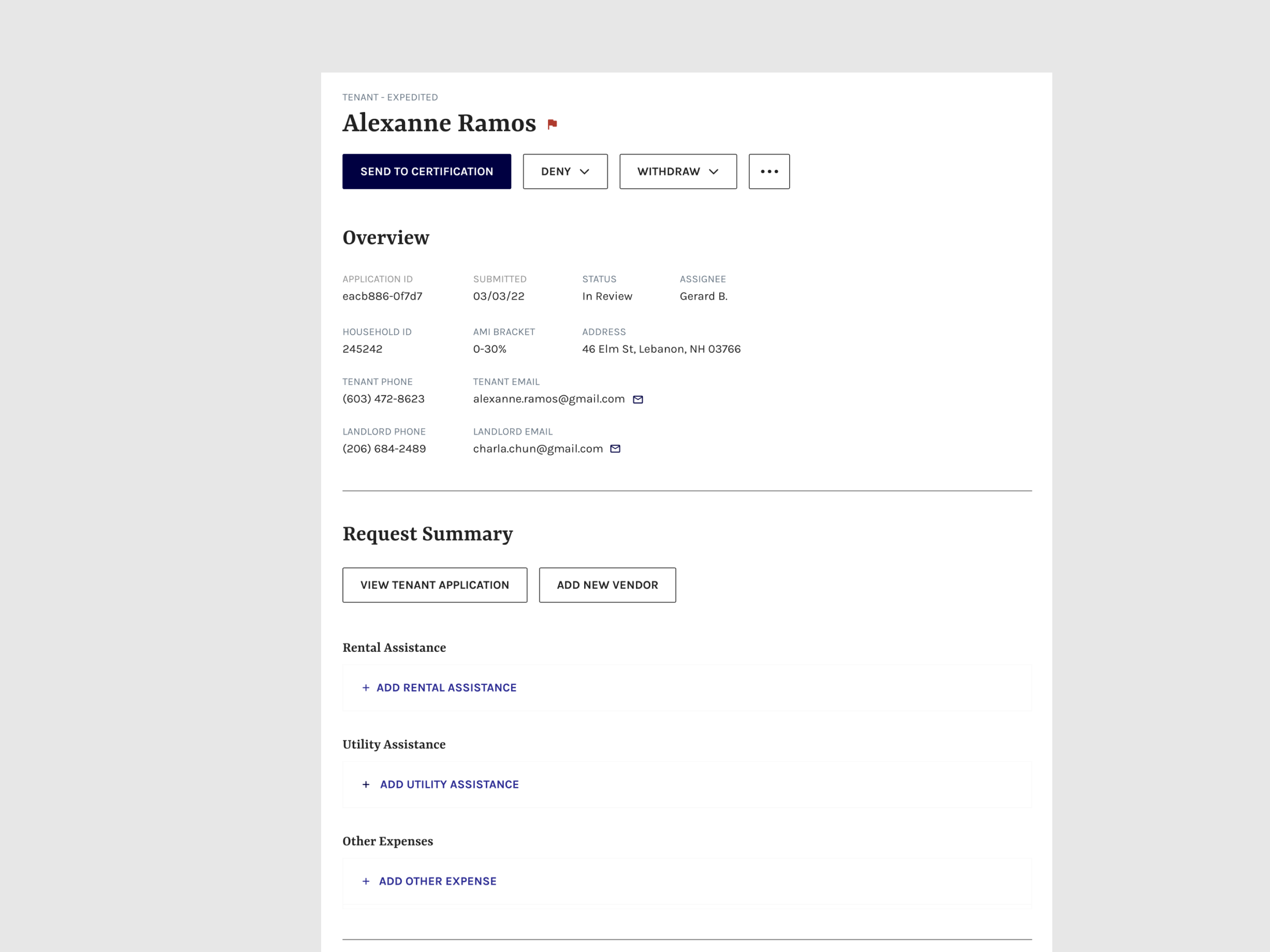
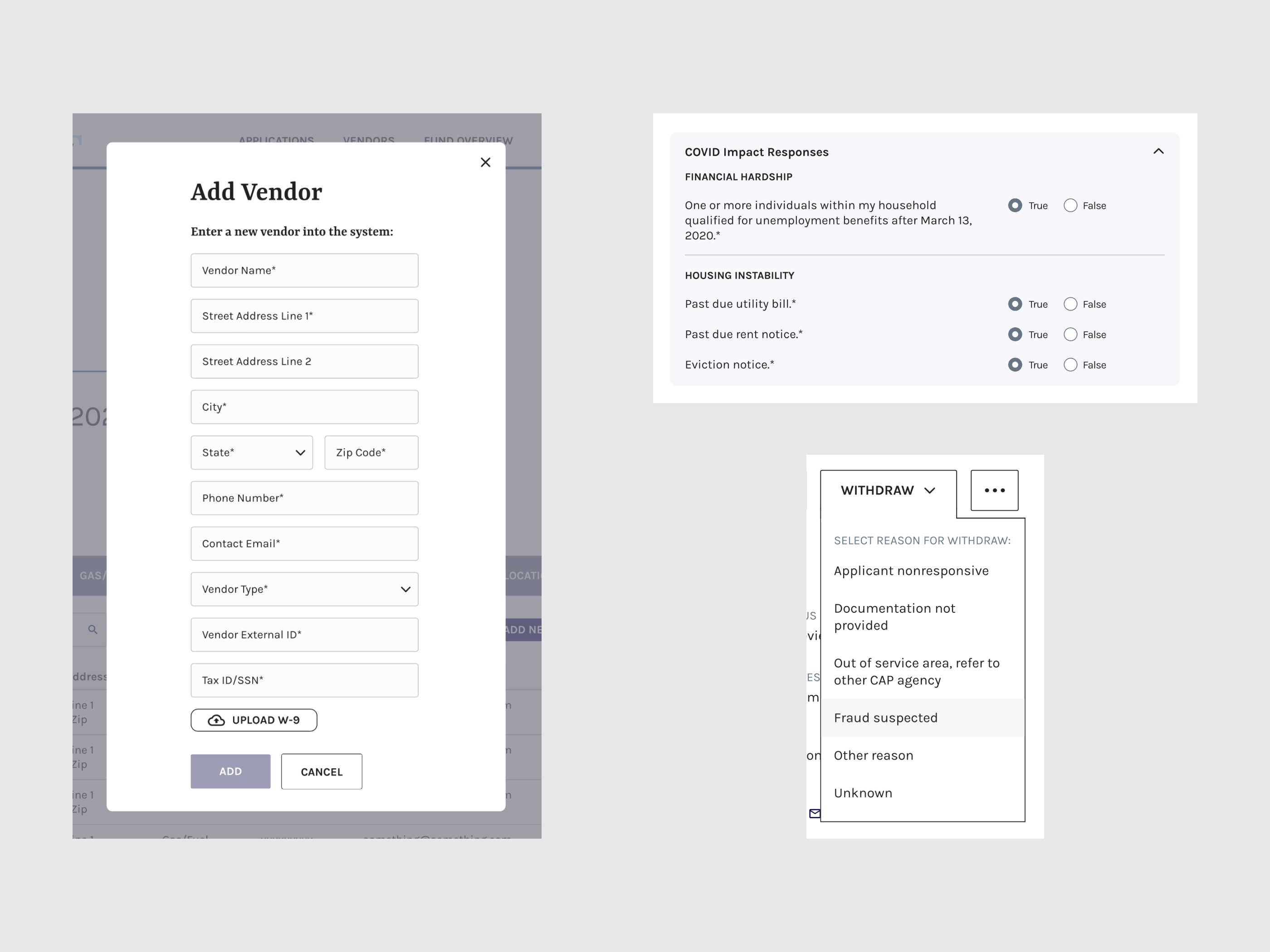
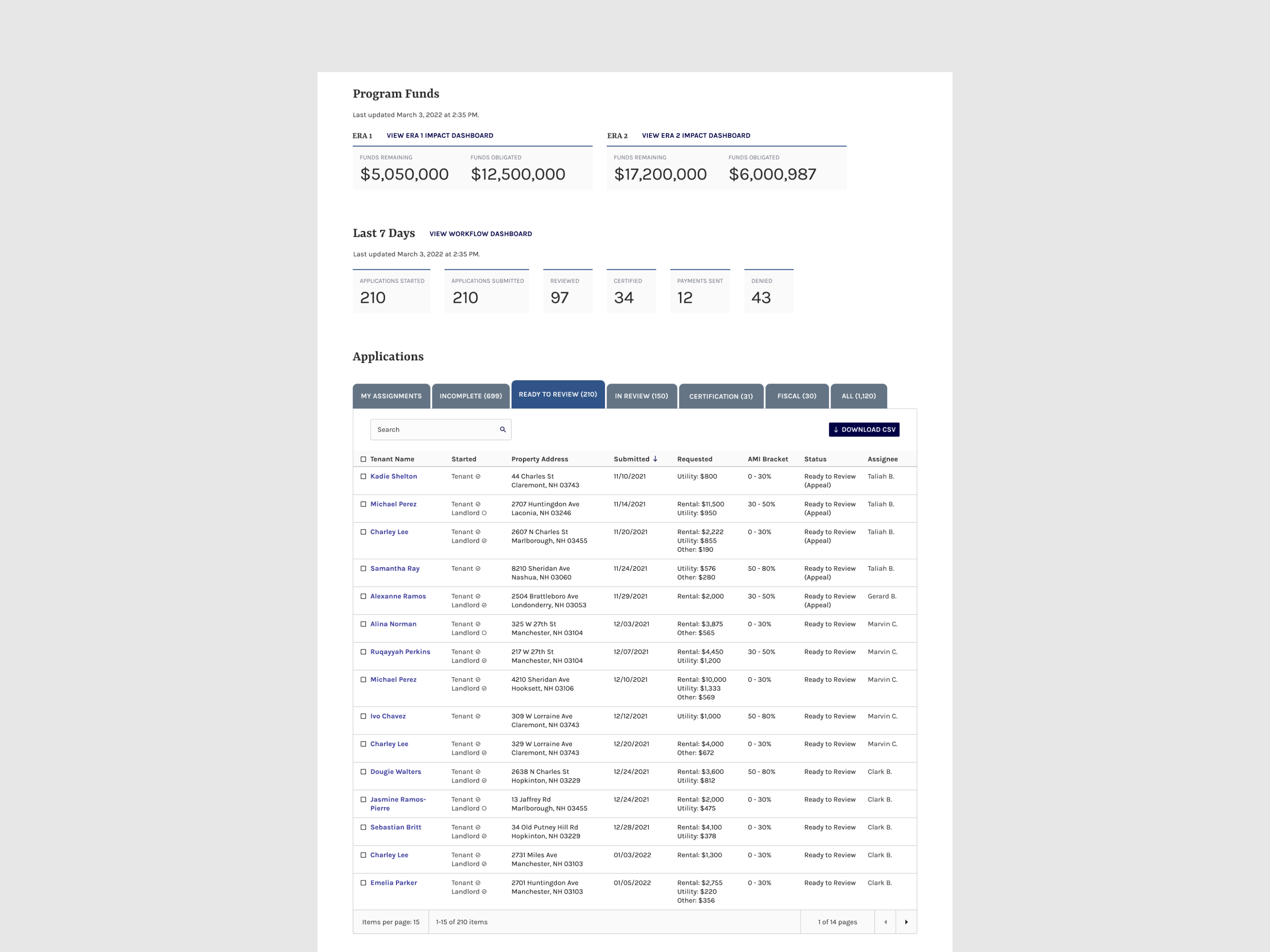
I spent several months designing what a case management system could look like for administrators. The primary view became a filterable list that covers key high-level data from each application — reviewers can then drill into a specific application to see the full details, add notes, and make a funding decision.
Some of the key elements of the administrative dashboard designs included:
• Prioritized application view that shows the most important criteria like need level
• Simple workflow for moving applications from one stage of review to the next, denying them, or sending them back for edits
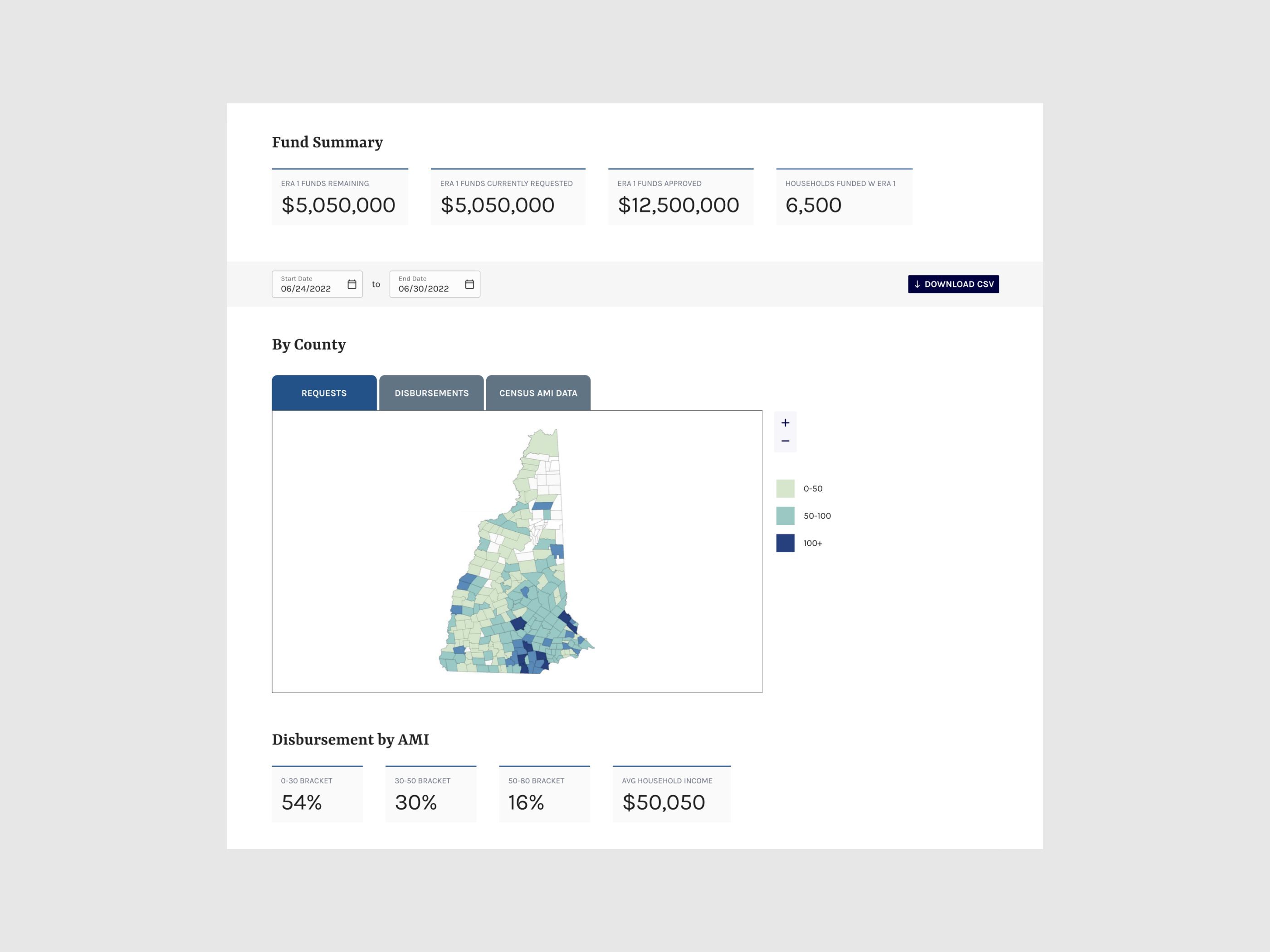
• Map showing disbursement of funds versus AMI bands to see how effectively funds are being distributed
• Key program financial data, including funds remaining
• Internal workflow metrics for how many applications are in each phase of review and how many each employee has been assigned
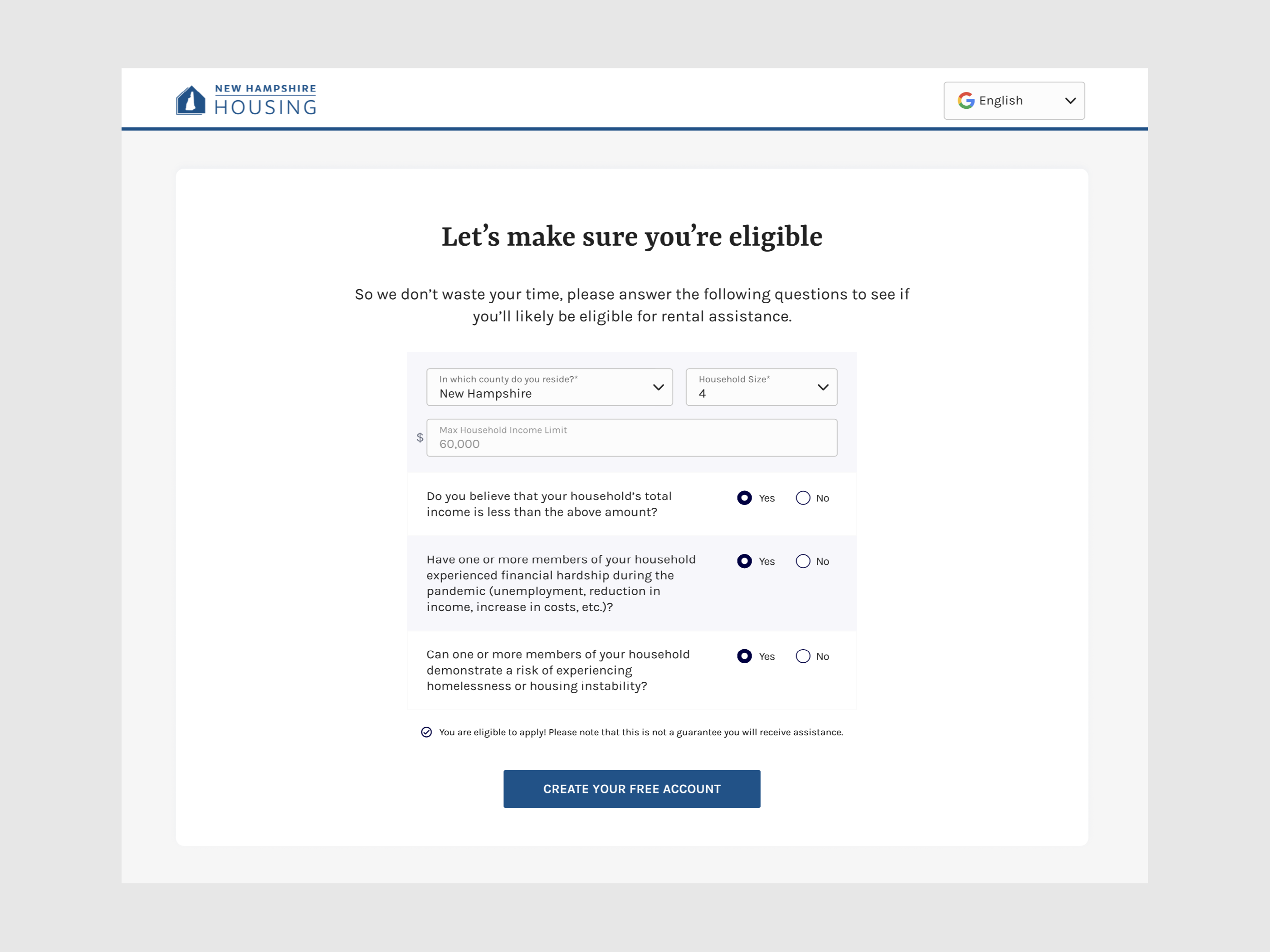
On the applicant side, knowing the product would be used under stress, I wanted to keep friction as low as possible while still hitting the necessary regulatory steps.
Some key features I built into the design of the tenant-facing application included:
• A fully-responsive experience to make it easy to apply from any device
• Easily-readable fonts and interface state changes that exceed compliance standards
• Clear UX writing on which information and documents are required to apply
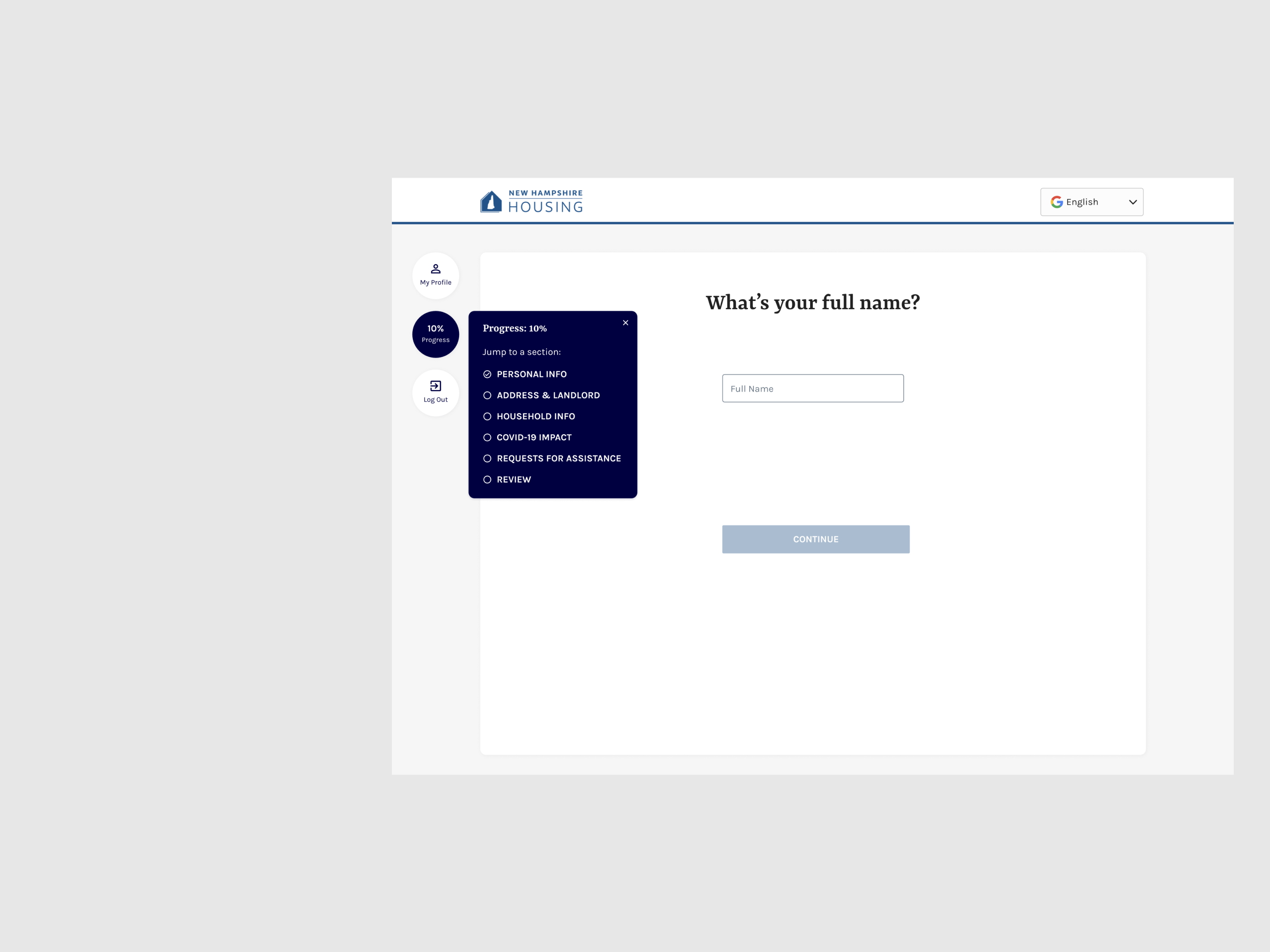
• A progress tracker that orients users and helps them gauge how long each section will take
• The ability to save progress throughout the application